The best current evidence shows real, material progress, and possibly a few genuine AI-originated results on open problems, but not yet an uncontested, community-settled case that AI has broadly “solved mathematics.”
What is firmly established
1) AI can now reach elite human-level performance on hard contest math
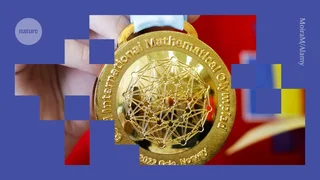
Google  DeepMind reported that an advanced version of Gemini Deep Think achieved gold-medal standard at the 2025 International Mathematical Olympiad, solving 5 of 6 problems under the contest rules.[1] That is strong evidence of advanced reasoning, but IMO problems are not open research problems.
2) AI systems are producing new, checkable mathematical advances
A more research-like result came from Google DeepMind’s AlphaEvolve work with Terence Tao: it found new or improved constructions/bounds in several active research areas, including a slight improvement in a finite-field Kakeya construction, and those results were then checked and formalized in Lean in at least some cases.[3][5] This is good evidence of material advancement, even when not a full solution to a famous conjecture.
3) AI is increasingly useful for formalization
 Anthropic reported a large Lean formalization of Fermat’s Last Theorem.[2][5] That is not a new theorem—Wiles already proved FLT—but it is strong evidence that AI can dramatically accelerate formal proof checking and formalization, which is a major bottleneck in modern mathematics.
What is more tentative
4) Some companies have publicly claimed AI-generated solutions or disproofs of previously open problems
 OpenAI has publicly claimed that one of its systems produced ten advances in mathematics and theoretical computer science, including results it says were formalized in Lean.[1] Those claims are potentially major, but they should still be treated as company-reported candidate breakthroughs awaiting broad independent validation unless and until specialists confirm the exact statements, novelty, and relationship to prior work.
There are also reports of more dramatic claims—such as a purported AI breakthrough on Navier–Stokes—but the evidentiary bar for a Millennium Prize problem is especially high, and such claims need complete public proofs, specialist scrutiny, and confirmation that they match the Clay formulation exactly. On the information available here, that level of community acceptance has not yet been established.
Bottom line
A careful summary would be:
- Yes: AI has clearly materially advanced mathematical research.
- Yes, possibly: AI has likely generated some new, machine-checkable results on previously open problems.
- Not yet firmly established: AI has not, on the current public evidence, achieved a widely accepted, independently validated end-to-end solution to a famous major open problem in the way the mathematical community would normally regard as settled.
Practical interpretation
The evidence now supports a new category of capability: AI systems can move beyond solving benchmark exercises and start contributing to research-grade mathematics, especially when coupled with formal proof systems like Lean.[1][3] The remaining question is not whether this is happening, but how many of the headline claims will survive the slower process of expert verification and publication.