The current evidence is that AI has materially advanced several previously unsolved mathematical problems, and in a few cases has produced results that appear to solve or refute open problems in a way that is machine-checkable or externally verified. But the strength of the evidence varies a lot by problem type.
What is well supported
1) AI has solved very hard Olympiad-level problems
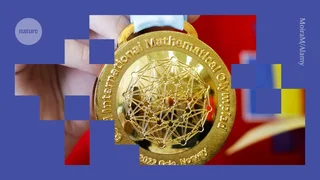
The strongest, most solid evidence comes from formal theorem proving on International Mathematical Olympiad problems.
 DeepMind’s AlphaProof + AlphaGeometry 2 solved 4 of 6 problems from IMO 2024, reaching silver-medal level, including the hardest problem on the exam.
- This is verified through formal proof infrastructure, so it is much stronger evidence than a natural-language “AI answer.”
This is a major advance in mathematical reasoning, but it is not quite the same as solving a frontier research problem, because IMO problems are designed for a competition and have known human solutions.
What is strong evidence of genuine mathematical discovery
2) AI has found new constructions and improved bounds in open problems
This is the clearest evidence that AI has gone beyond imitation.
Examples include:
- FunSearch: found new constructions related to the cap set problem and improved bin-packing heuristics.
- AlphaEvolve: reportedly improved known results in areas such as the 11-dimensional kissing-number lower bound and 4×4 complex matrix multiplication.
- These are not full solutions to the underlying open problems, but they are real advances: the AI found better objects, constructions, or algorithms than were previously known.
This category is the most convincing evidence that AI is contributing original mathematical content.
What is possible but should be read cautiously
3) Claims of AI solving famous open problems
There are public claims that AI systems have produced major results on problems such as:
- Navier–Stokes
- Connes’s rigidity conjecture
- discrete geometry conjectures
- Fermat’s Last Theorem formalization
The key distinction is this:
- A formalized proof or externally checked proof is strong evidence.
- A company announcement without independent mathematical validation is weaker, even if technically impressive.
So the evidence is strongest when the result is:
- formally checked by a proof assistant like Lean, or
- independently verified by human mathematicians and published.
The best overall summary
AI has clearly moved from merely solving benchmark problems to doing things that look like real mathematical research assistance, including:
- discovering new constructions,
- improving known bounds,
- finding formally verified proofs,
- and solving very hard competition problems.
However, the evidence for AI having generally solved major open problems in mathematics is still limited. The most defensible statement is:
AI has already materially advanced previously unsolved mathematics in narrow but important areas, and it has achieved some fully verified breakthroughs, but it has not yet demonstrated broad, autonomous mastery of frontier mathematical research.