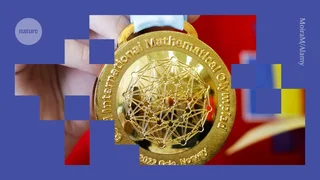
As of 14 October 2026, the evidence is strong that AI has materially advanced some previously unsolved mathematical problems, but still limited for the stronger claim that AI has independently solved major canonical open problems.
What the best current evidence shows
1) AI has produced genuinely new research-level results
The clearest example is  DeepMind’s FunSearch work on the cap-set problem in extremal combinatorics. This is a real open problem, and the system found new constructions and improved lower bounds, published in Nature and backed by an official DeepMind announcement and reproducible code. This is one of the strongest public examples of AI discovering new mathematics rather than just solving benchmark exercises.
Other verified examples in the same category include:
- new constructions and counterexamples in combinatorics and graph theory,
- improved bounds in some discrete math problems,
- generalizations of known olympiad results.
2) AI has materially accelerated human solutions to open problems
A particularly important recent case is the reported GPT-5 + Ernest Ryu collaboration on a 40-year-old optimization problem about Nesterov accelerated gradient stability. The model did not provide a complete proof on its own, but it helped identify structure, prune dead ends, and speed up the human proof process dramatically. That is real progress on an open problem, even if it is not autonomous theorem proving.
3) AI can now produce machine-checkable proof artifacts
A major shift is the move from “chatbot answers” to formalized proofs in systems like Lean. Some recent AI-generated results come with proof artifacts that can be mechanically checked, which raises confidence substantially. That said, formal verification only certifies the stated formal theorem; it does not automatically establish that the theorem matches the headline claim, is novel, or is mathematically important.
4) AI has reached medal-level or near-medal-level performance in olympiad math
Systems such as AlphaGeometry, AlphaProof, and later systems like Aristotle show that AI can solve very hard contest problems at or near elite human level, often with formal verification. This is impressive evidence of mathematical reasoning ability, but olympiad problems are not the same as unresolved research problems.
What the evidence does not yet show
AI has not clearly solved major famous open problems in their standard form
There is public material about large AI-generated math corpora and some provocative announcements, but the strongest claims remain unconfirmed or scope-limited. In particular:
- The Navier–Stokes episode does not yet amount to a verified solution of the official Clay Millennium Problem as stated. The public material concerns a more specific or modified setting, notably forced flows and related formalized behavior, which is mathematically interesting but not the same as the standard unforced Millennium formulation.
- Claims about having solved multiple “unsolved” problems can collapse on inspection when the underlying problem was already known in the literature or was not truly open under the precise formulation.
Best overall assessment
The current evidence supports this summary:
AI has crossed from solving math puzzles into producing real mathematical research outputs—new constructions, improved bounds, counterexamples, formal proofs, and human-accelerating insights—but it has not yet been publicly demonstrated to have autonomously solved a major canonical open problem in the strongest sense.
Practical way to read current claims
When you see a claim that AI “solved” an open problem, the key questions are:
- Is the problem truly open under the exact stated formulation?
- Is there a reproducible formal proof or independently checkable construction?
- Does the result match the official problem, or a modified/forced/restricted version?
- Has the mathematical community had time to verify novelty and correctness?
So the honest bottom line is:
- Yes: AI has materially advanced previously unsolved mathematics.
- Yes: some of those advances are serious and formally checkable.
- No, not yet: there is no widely accepted public evidence that AI has independently solved a major canonical open problem like the standard Navier–Stokes Millennium problem, Riemann hypothesis, or P vs NP.