The current evidence says AI has materially advanced several previously unsolved mathematical problems, and in a few cases appears to have genuinely solved or disproved open conjectures, but the strongest evidence is still narrow and problem-specific, not a general proof that AI can independently solve frontier mathematics. The best-supported cases are open-problem disproofs, new constructions, and formal proof search, rather than landmark problems like the Riemann hypothesis or \(P \ne NP\).
What is clearly evidenced
1) A major open conjecture in discrete geometry was disproved
 OpenAI reported that one of its reasoning models produced a proof that disproves Erdős’s planar unit-distance conjecture by constructing an infinite family with more unit-distance pairs than the conjecture allowed.[2]
A companion paper by human mathematicians states that the AI-generated argument was mathematically valid, while also refining and simplifying parts of it.[2]
This is the strongest public example so far of AI contributing to a genuine advance on a longstanding open problem.
2) AI has reached research-level formal proof capability
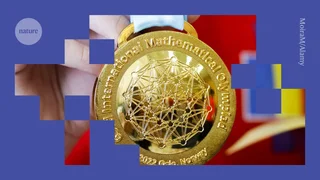
 DeepMind’s AlphaProof and AlphaGeometry 2 solved 4 of 6 problems at the 2024 IMO, reaching a silver-medal-equivalent score.[5]
That is not an “open problem” result, but it is strong evidence that AI can handle long, rigorous mathematical reasoning in formal settings.
3) AI systems have found new results in open mathematical research
DeepMind’s FunSearch used an LLM-guided search to discover new constructions related to the cap set problem, a long-standing open question in extremal combinatorics.[3]
This counts as material progress on an open problem, though it is best described as a new construction/better bound rather than a complete resolution.
4) More recent work shows broader research capability
Recent formal-proof-search and agentic systems report solving subsets of open problems in databases such as Erdős and OEIS-style collections, but these claims vary in strength depending on whether the result was:
- formally verified,
- independently checked,
- based on a human-edited proof,
- or only reported in a preprint or company post.[4][6]
What remains unproven or uncertain
- There is not strong evidence that AI has autonomously solved the deepest famous open problems.
- Many results still involve human verification, reformulation, or cleanup.
- Some reported “open problem” successes are on specialized or lower-complexity questions, not major flagship conjectures.
- For several 2025–2026 claims, the public record is still mostly preprints, official blog posts, or controlled evaluation reports, so long-term mathematical acceptance may still evolve.[4][6]
Bottom line
The best current reading is:
AI has already made real mathematical discoveries and has at least one well-supported open-problem disproof to its credit, but it has not yet broadly solved frontier mathematics on its own.
The evidence is strongest for formal proof search, counterexample discovery, and construction of improved bounds, and weakest for claims of general autonomous theorem-solving across major unsolved problems.[2][3][5]